
Article: A Thousand Records and £600: What Does Value Mean in Hi-Fi?
A Thousand Records and £600: What Does Value Mean in Hi-Fi?
Spend enough time around high-end audio and sooner or later somebody will look at a product and ask:
How can that possibly be worth that much?
It's a perfectly reasonable question.
A cable can cost thousands of pounds. A cartridge small enough to sit in the palm of your hand can cost more than many complete turntables. Tonearms can cost tens of thousands. Electronics and loudspeakers can reach considerably further.
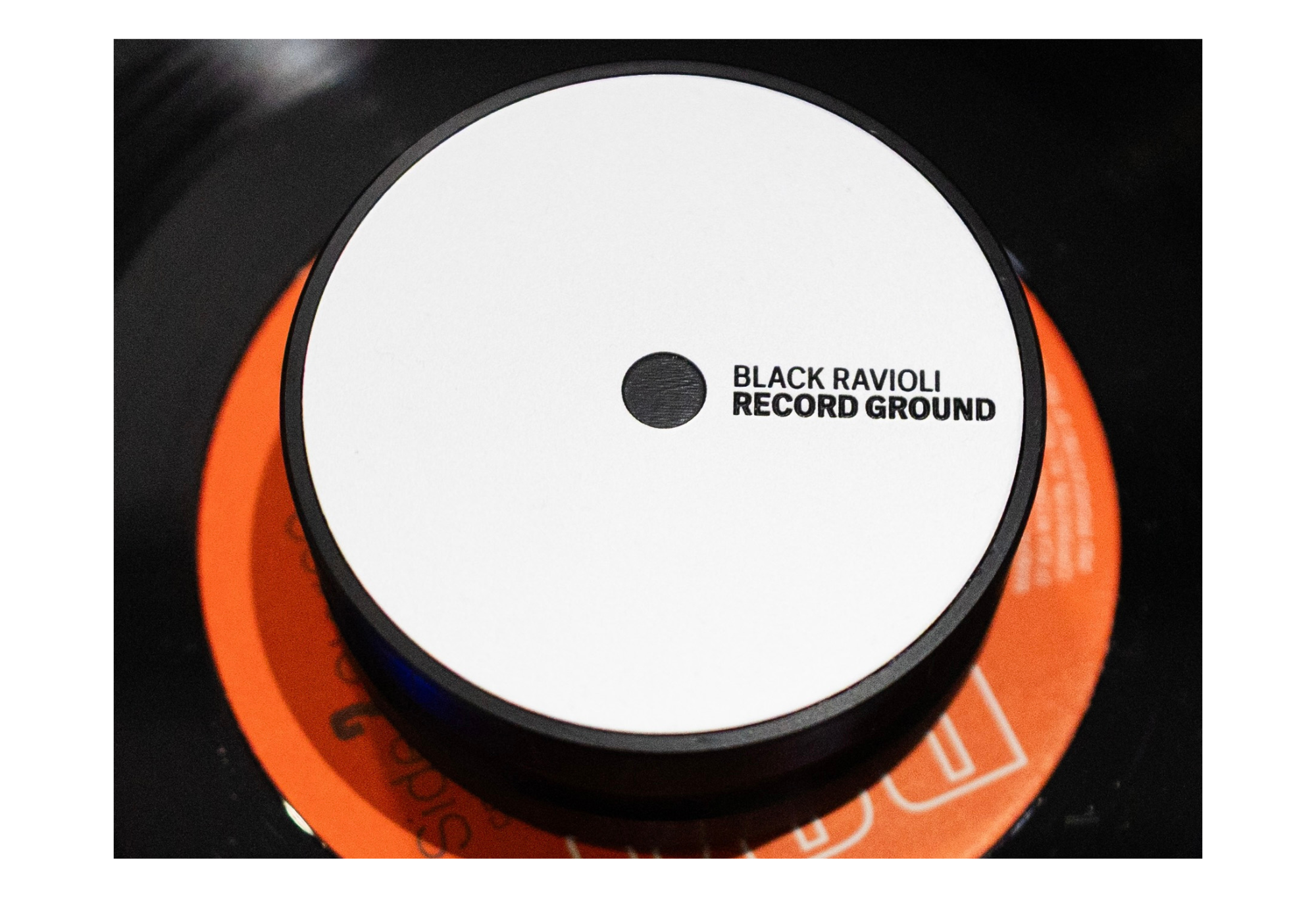
And, of course, a Black Ravioli Next Level Record Ground costs £600.
So what exactly are we paying for?
More importantly, who decides what represents value?
High-End Audio Has a Peculiar Economy
One criticism sometimes levelled at the high-end audio industry is that as the market has become increasingly specialist and production volumes have fallen, prices and margins have risen to compensate.
There's some economic logic to that.
Small-volume manufacturing is expensive. Development costs are spread across fewer products. Specialist components, machining, assembly, testing and support all have to be paid for.
But there's another significant part of the retail price that has nothing to do with what's inside the box.
It's the route the product takes to reach you.
Traditionally, that might look something like this:
Manufacturer → Distributor → Retailer → Listener
Every business in that chain needs sufficient margin to operate.
The distributor provides representation, stockholding, logistics, marketing, exhibitions, dealer support and often warranty handling.
The specialist retailer provides premises, demonstration rooms, knowledgeable staff, stock, advice, installation and after-sales support.
These are real services and good retailers can add considerable value.
But they have to be paid for.
Ultimately, they are paid for within the price of the product.
We Chose a Different Route
Black Ravioli sells directly to the listener.
We're not alone in doing this. Other small audio manufacturers have reached much the same conclusion.
For us, it's particularly important because of the relatively small numbers in which our products are manufactured.
If we placed Black Ravioli into a conventional worldwide distributor and dealer network, we'd undoubtedly gain considerably greater exposure.
More people would encounter the products.
Dealers could demonstrate them.
Production volumes might increase.
There would be genuine advantages.
But there would also have to be enough money in the retail price for the distributor and retailer to operate.
That leaves a small manufacturer with two choices:
Receive considerably less for developing and manufacturing the product, or increase the retail price.
Realistically, our products would have to become considerably more expensive.
And ultimately it would be the customer paying for that increased exposure.
We decided we'd rather do things differently.
Direct Doesn't Mean Cost-Free
Removing the traditional distribution chain doesn't mean those responsibilities disappear.
We have to find our own customers.
We do our own marketing.
We attend shows.
We manufacture the products.
We carry the stock.
We answer the questions.
We ship internationally.
And we provide the after-sales support.
Most importantly, we've had to find an alternative to the dealer demonstration.
Our answer is a 60-day home audition with free return shipping.
Rather than spending an hour listening in an unfamiliar showroom, you can put the product into the system you already know.
Play your music.
Live with it.
Decide for yourself.
If it doesn't earn its place, it comes back.
For the type of products we make, we think that's actually a very good way to establish value.
Because Price and Value Aren't the Same Thing
This is where the discussion becomes more interesting.
The price of something is easy to establish.
The value isn't.
You can look at a Record Ground and see an object weighing approximately 180 grams.
You can compare its physical dimensions with another record puck.
You can look at the materials.
And you can ask:
How can that be worth £600?
Our answer is that we can't tell you that it is.
Only you can.
Because the value isn't established by its weight, dimensions or the amount of material from which it's made.
It's established by what happens when you use it.
A Thousand Records and £600
Imagine somebody owns a thousand records.
Perhaps they've spent twenty or thirty years building that collection.
They know those records intimately.
Some are valuable first pressings. Some cost a few pounds. Some have followed them through half their life.
Most importantly, they enjoy listening to them.
Now imagine they have £600 available to spend on their system.
What represents better value?
The traditional hi-fi answer might be another upgrade.
A different cartridge.
Another cable.
A power supply.
A new component.
Or perhaps the first £600 towards something considerably more expensive.
There may be absolutely nothing wrong with any of those choices.
But we'd ask a slightly different question:
Do you need to replace something, or could you get more from the music and equipment you already own?
That's much closer to what Black Ravioli is about.
What If the Upgrade Is Your Record Collection?
The Record Ground doesn't replace your turntable.
It doesn't replace your tonearm.
It doesn't replace your cartridge.
And it certainly doesn't replace your records.
It was developed to reduce unwanted noise at the record and stylus interface, allowing the turntable you've already chosen to retrieve and present more of the information that's already there.
So for somebody with a thousand records, the potential benefit isn't restricted to one piece of equipment.
It potentially applies every time they lower the stylus.
The treasured first pressing.
The slightly worn album they've owned for thirty years.
The £5 record from the second-hand shop.
The record they thought they knew backwards.
That's a rather different way of looking at £600.
What Are We Actually Trying to Improve?
There can be a tendency in high-end audio for the equipment itself to become the destination.
There's always another component.
Another cable.
Another upgrade.
Another reason to replace something that, until yesterday, you were perfectly happy with.
That's not particularly interesting to us.
We're interested in people who enjoy listening to music.
If you already have a system you love and a collection of music you've spent years building, we'd rather help you hear more from what you already own than convince you that everything needs replacing.
The equipment is there to reproduce the music.
The music isn't there to demonstrate the equipment.
So Is £600 Expensive?
If you put a Record Ground on your turntable and it does nothing worthwhile for you?
Yes.
Very.
If you're straining to convince yourself that something has changed, we'd question why you'd spend the money.
Send it back.
We'll pay the return postage.
But suppose something else happens.
You put it on a record you've known for twenty years and hear something you weren't expecting.
Then you play another.
And another.
You start pulling records from the shelf because you want to hear what happens.
Perhaps records you thought were mediocre recordings become more enjoyable. Perhaps familiar recordings reveal more information. Perhaps you simply find yourself becoming less conscious of the system and more involved in the music.
Then you realise that the same thing is available across a collection of a thousand records.
The price hasn't changed.
Its value to you has.
That's the Problem With Judging the Object
High-end audio is full of products whose material cost bears little obvious relationship to their selling price.
A moving-coil cartridge may contain tiny quantities of material yet cost thousands.
A tonearm can cost as much as a complete system.
Cables can cost more than amplifiers.
We don't necessarily determine whether those products represent value by weighing them.
We listen.
Then we decide whether what they contribute is worth the asking price.
We don't see why our products should be judged any differently.
That doesn't mean an expensive product automatically represents good value.
Quite the opposite.
It has to earn it.
The Most Expensive Upgrade Can Be the One That Does Nothing
A £100 accessory that contributes nothing to your enjoyment of music is £100 wasted.
A £600 product that produces a meaningful improvement throughout a system someone has spent many thousands assembling may represent considerably better value.
Equally, a £20,000 component isn't automatically good value because it's beautifully engineered or comes in an impressive box.
It has to deliver something the listener values.
Price is objective. Value is personal.
From Sceptic to Customer
We've recently watched this happen rather publicly.
An experienced audiophile approached the Record Ground with considerable scepticism.
He already owned and had experience with several alternative record pucks, clamps and stabilisers.
He questioned our explanation.
He questioned what made the Record Ground different.
And he questioned the £600 price.
All perfectly reasonably.
Then he tried one.
After several days comparing it against products he already knew and liked, he wrote:
“It's genuinely lowering noise floor to allow a real flourishing of detail.”
And later:
“It's taking my TT performance up several notches.”
He decided to keep it.
That doesn't prove that somebody else will hear the same thing.
Nor does it prove that £600 represents good value to everybody.
It demonstrates something much more relevant to us.
He established its value by listening.
He didn't have to accept our opinion.
And neither do you.
Beyond the Record
The same thinking is now moving elsewhere in the system.
Our new Next Level Grounds evolved from the development of the Next Level range and are placed directly onto equipment casework.
A DAC.
A streamer.
An amplifier.
A phono stage.
A power supply.
They aren't record pucks because there's no record involved.
They don't replace the equipment.
They're intended to allow the equipment you already own to perform with less unwanted noise getting in the way.
And because they're so easy to move, you can experiment throughout the system and decide where they provide the greatest benefit.
Again, the question isn't:
How much should four objects of this size cost?
It's:
What do they do for the presentation of the music?
If the answer is nothing worthwhile, they're expensive.
If they allow a component costing many thousands of pounds to perform noticeably better, the calculation becomes rather different.
The listener decides.
Perhaps We Should Spend More Time Listening
There will always be arguments about high-end audio.
Some criticism of pricing is entirely justified.
There are products we wouldn't buy ourselves.
There are prices we struggle to understand.
And we're certainly not suggesting that spending more automatically produces better music reproduction.
It doesn't.
But neither do we believe value can be determined from a photograph, a specification sheet, the weight of an object or the opinion of somebody who hasn't heard it.
That's why we've deliberately removed as many barriers to listening as we reasonably can.
We sell directly.
We offer 60 days at home.
We pay the return shipping.
And increasingly, we're building our exhibitions around direct A/B demonstrations rather than displays.
We can explain what we set out to achieve.
But the listening has to do the talking.
So What Does Value Mean in Hi-Fi?
Perhaps it's simpler than the industry sometimes makes it.
If you have a system you love and a thousand records you've spent a lifetime collecting, the next step doesn't necessarily have to be replacing another piece of equipment.
Maybe the better investment is the one that lets you get more from what you already have.
Play ten records.
Play fifty.
Rediscover the ones you haven't heard for years.
Then decide what the difference is worth to you.
Not to us.
Not to a retailer.
Not to a reviewer.
And certainly not to somebody on a forum who has never heard it.
To you.
Because ultimately, that's where we believe value in high-end audio resides.
Not in the box.
Not in the margin.
Not in the price tag.
In the presentation of the music, and what that is worth to the person listening.



Leave a comment
This site is protected by hCaptcha and the hCaptcha Privacy Policy and Terms of Service apply.